
Finding Central Residents
Choose the first record by what is known. A street address belongs in the East Baton Rouge Parish Assessor search and EBRGIS. A full name can be checked in Clerk Connect, the Louisiana voter portal, or a relevant professional-license index. An older address calls for the Clerk Archives, city directories, census schedules, obituary indexes, and newspapers. Central incorporated in 2005, so earlier evidence is normally filed under East Baton Rouge Parish or Baton Rouge-area collections rather than a Central municipal archive.
No official roll is a complete household list. Assessment records show ownership and a mailing address, which may differ from the physical or situs address. Public voter tools expose only limited registration fields. Court and deed indexes include people only when a filing or recorded act exists. Renters, relatives, and other occupants may leave no current public address-keyed trace. Treat each result as one part of a Central residents directory search, and corroborate identity before drawing a conclusion. Record the date searched because ownership, registration, and case status can change. Save document numbers rather than relying on a name copied from a results screen.
- Search SmartCAMA by owner or physical address and note the parcel and mailing fields.
- Open EBRGIS to confirm the lot, subdivision, nearby parcels, and jurisdiction.
- Use the Louisiana Voter Portal or Clerk index when a name needs a second match.
- For an older household, consult the Central Branch Library, Baton Rouge Room, and Clerk Archives.
- Request a specific city record by series, address, document type, and date range when it is not posted.
Central Resident Records Offices
Central is inside East Baton Rouge Parish, and Baton Rouge is the parish seat. The Clerk of Court records deeds and keeps court, marriage, probate, mortgage, conveyance, and archival files. The Assessor maintains ownership and assessment data. The Secretary of State and parish registrar administer voter access. City Hall holds Central permits, planning, code, meeting, and other municipal records. This division matters: the city cannot supply a parish deed, and an assessor record cannot prove who occupies a home. The Central street directory explains the address trail in detail.
East Baton Rouge Parish Clerk
222 St. Louis Street
Baton Rouge, LA 70802
225-389-3950
EBR Parish Assessor
14790 Wax Road, Suite 109
Baton Rouge, LA 70818
225-389-3922
Central Property Search Fields
The SmartCAMA assessment search accepts owner names, physical addresses, assessment numbers, and other property criteria. Use the physical-address pane for a street lead. The mailing address may come from a recorded transaction and can differ from the site itself. An assessment identifies the assessed owner, parcel facts, and value context, but it does not list all residents.
| Search field | Control | How to use it |
|---|---|---|
| Owner name | Text | Find assessments tied to a known owner spelling. |
| Street number and name | Text | Search the physical or situs address. |
| City, state, ZIP | Text or dropdown | Narrow the physical-address criteria without treating postal data as a city boundary. |
| Assessment number | Text pane | Return to a known parcel record directly. |
The official interface shows how Central address searches are framed:
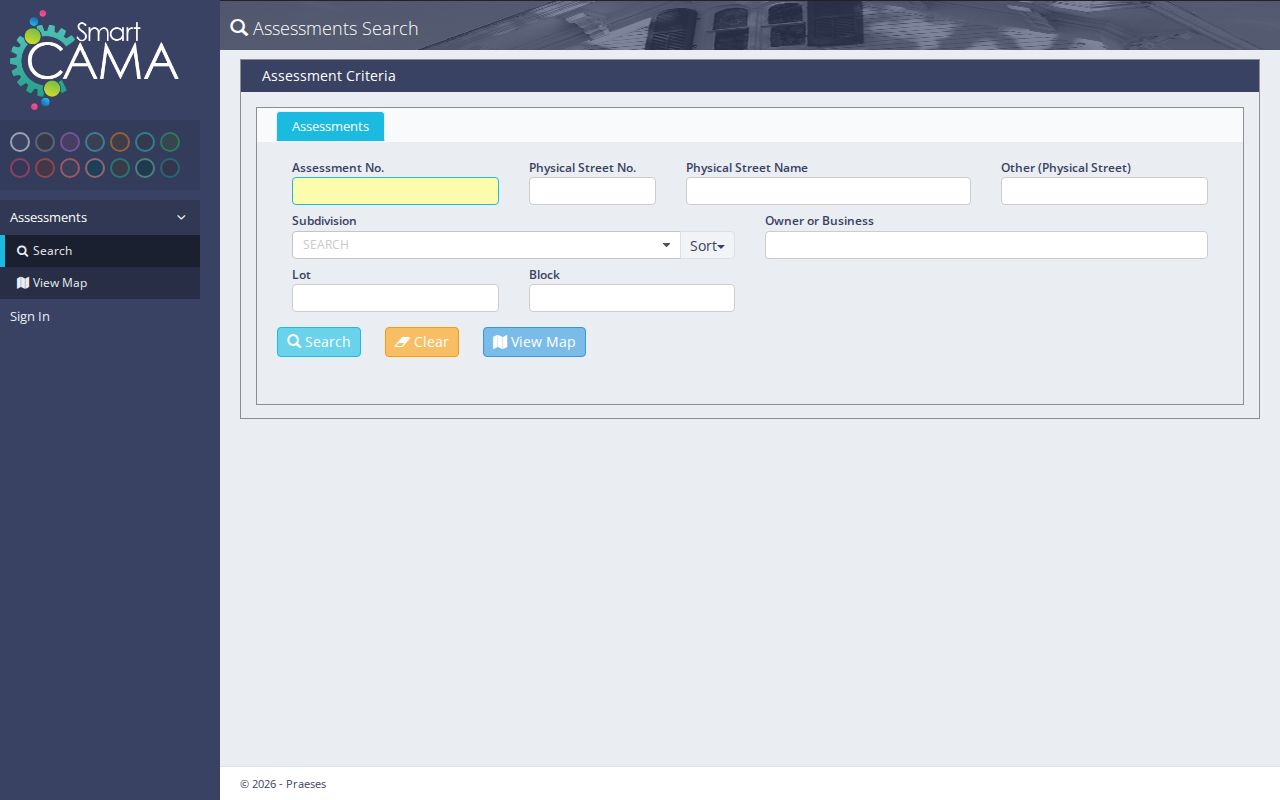
Carry the assessment number or parcel clue into GIS and deed records instead of treating the owner field as proof of occupancy.
Mapping Central Resident Parcels
The Assessor Atlas GeoPortal adds the map layer. It helps locate a parcel, see adjacent tracts, and use print or export controls. EBRGIS also supports address number and street name, subdivision, business name, NAICS code, or lot identification number. Prefixes and suffixes are not required in its basic address search.
The Atlas view makes the difference between a street label and a legal parcel easier to see:
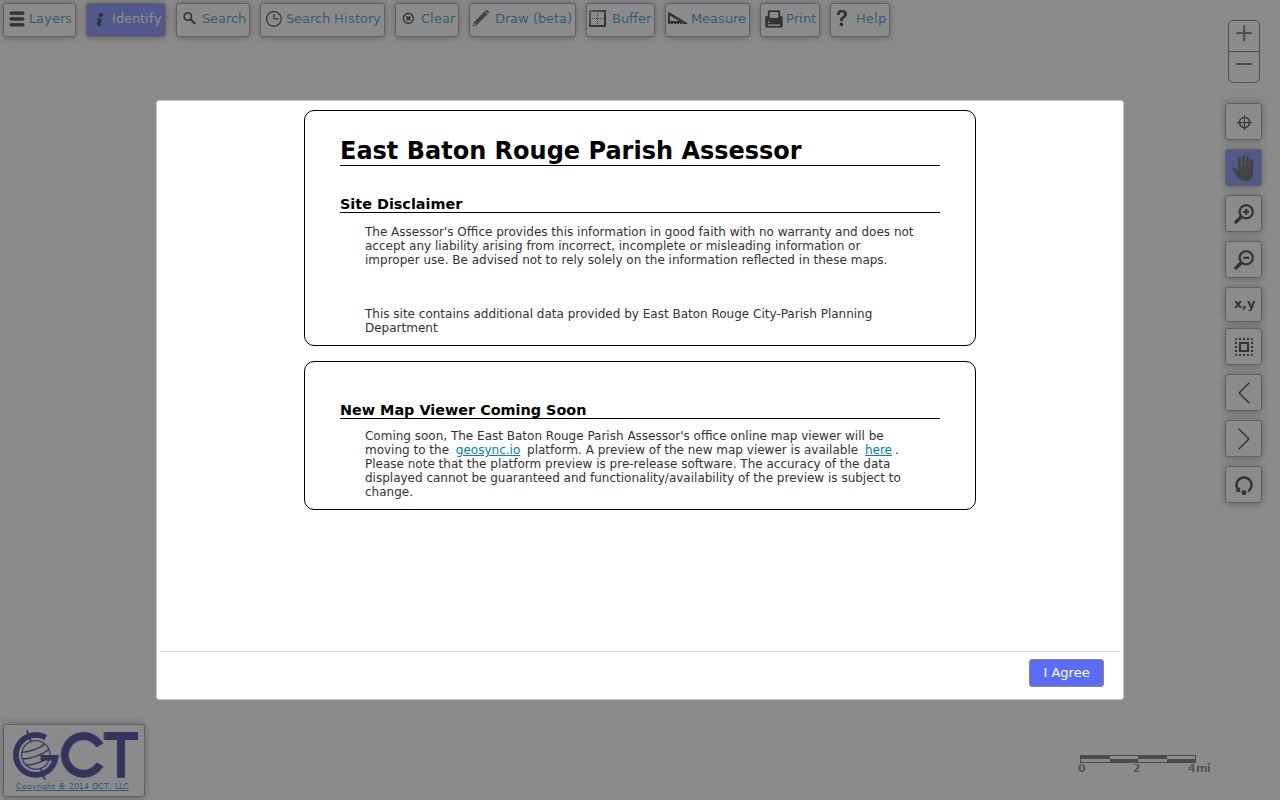
Map boundaries provide context, not a verified household roster. Confirm ownership in the assessment roll and recorded transfers through the Clerk.
Central Deeds and Names
Louisiana has no separate county recorder for Central. The East Baton Rouge Parish Clerk indexes mortgage and conveyance acts by parties. Vendor and vendee mean seller and buyer; mortgagor and mortgagee identify the borrower and lender. Recorded material can include sales, leases, servitudes, partitions, tax sales, judgments of possession, wills, liens, releases, and corrective acts. Those names form a strong ownership trail.
The Clerk Connect gateway routes users to property, civil, criminal, traffic, family, probate, and marriage records:
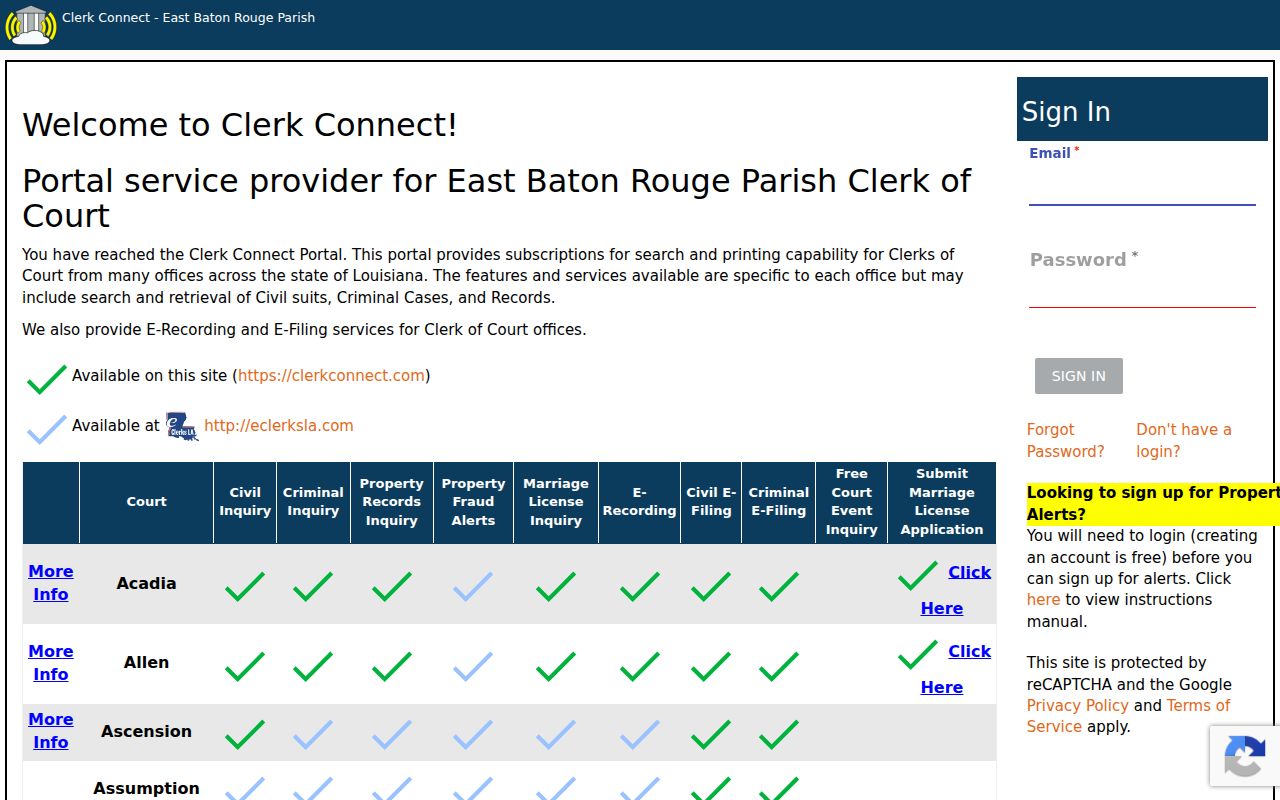
Online passes and printing may cost money. A counter search and the Archives remain important when an index entry or older image is not available online.
Current Central Resident Directories
Modern directory evidence is purpose-built. Each source covers a defined group, not all Central residents. The best choice depends on whether the question concerns ownership, registration, a recorded act, municipal staff, or neighborhood context.
| Source | Who It Lists | Keeper | Access |
|---|---|---|---|
| Assessment roll | Assessed owners | EBR Parish Assessor | Free search |
| Voter Portal | Registered voters with matching personal fields | Louisiana Secretary of State | Free, limited public view |
| Clerk index | Parties to recorded acts and cases | EBR Parish Clerk | Gateway plus paid access |
| City staff directory | Central officials and staff | City of Central | Free online |
| Neighborhood registry | Registered civic organizations | City-Parish GIS | Free map and list |
Compare fields rather than names alone. A common name becomes more reliable when parish, middle initial, property interest, case date, or license type also matches. The Central resident lookup sets out that one-person workflow.
Central Voter Lookup Limits
The Louisiana Voter Portal asks for first name, last name, ZIP code, and birth month and year. Its public design is meant to let a voter check registration and election details, not reveal an address-linked list of everyone on a block. Louisiana also protects participants in the Address Confidentiality Program and other restricted records.
The official portal shows the identity fields required for a match:
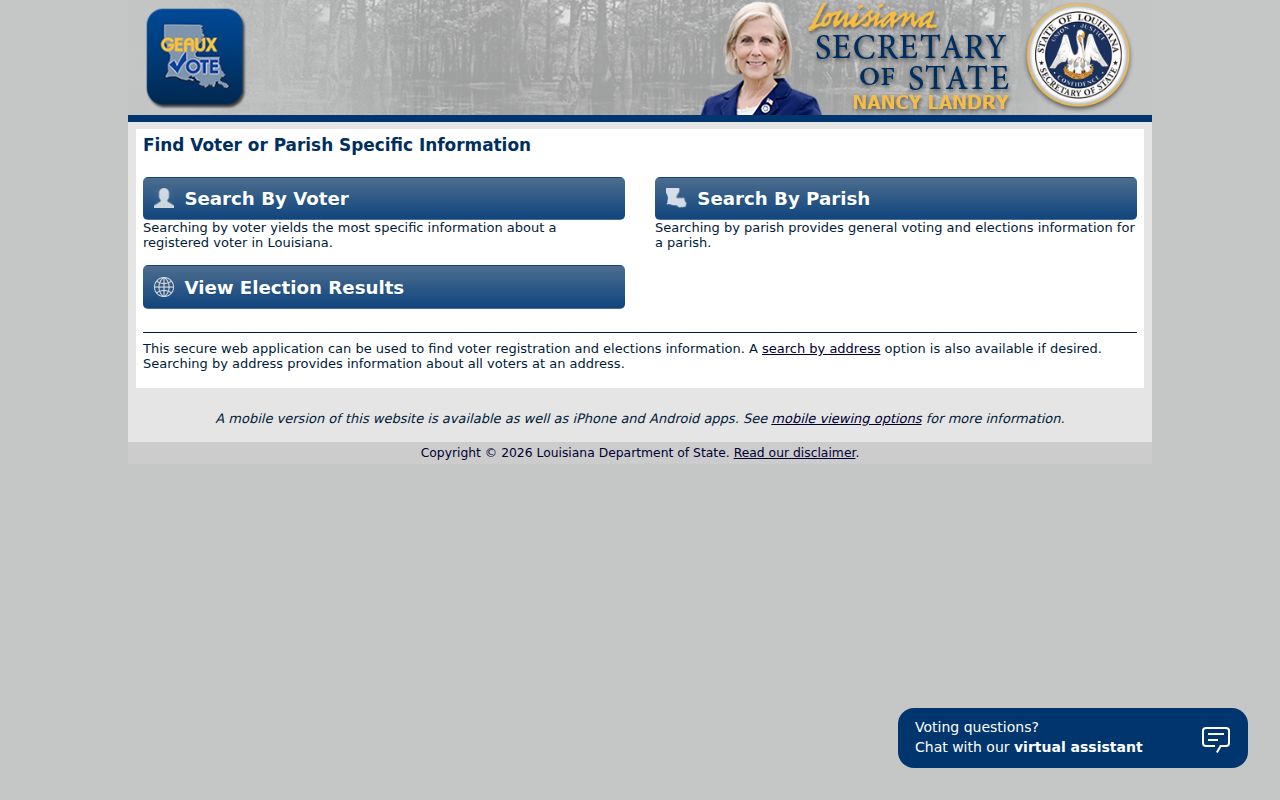
Use voter information only as a narrow confirmation. Do not infer that a missing result means the person has no Central connection.
Lawful use. Central public records support genealogy, civic research, reunions, estate work, and personal safety. Never use them to stalk, intimidate, or harm anyone.
Central City Record Requests
Central City Hall keeps municipal records such as planning, zoning, permits, code matters, meeting files, and occupational-license applications. The city site identifies the Institute for Building Technology and Safety as its authorized public-record responder under La. R.S. 44:1(A)(3). Requests work best when they name a series, address, date range, and document type, and ask for electronic delivery and a fee estimate.
The City of Central home page is the starting point for current departments and notices:
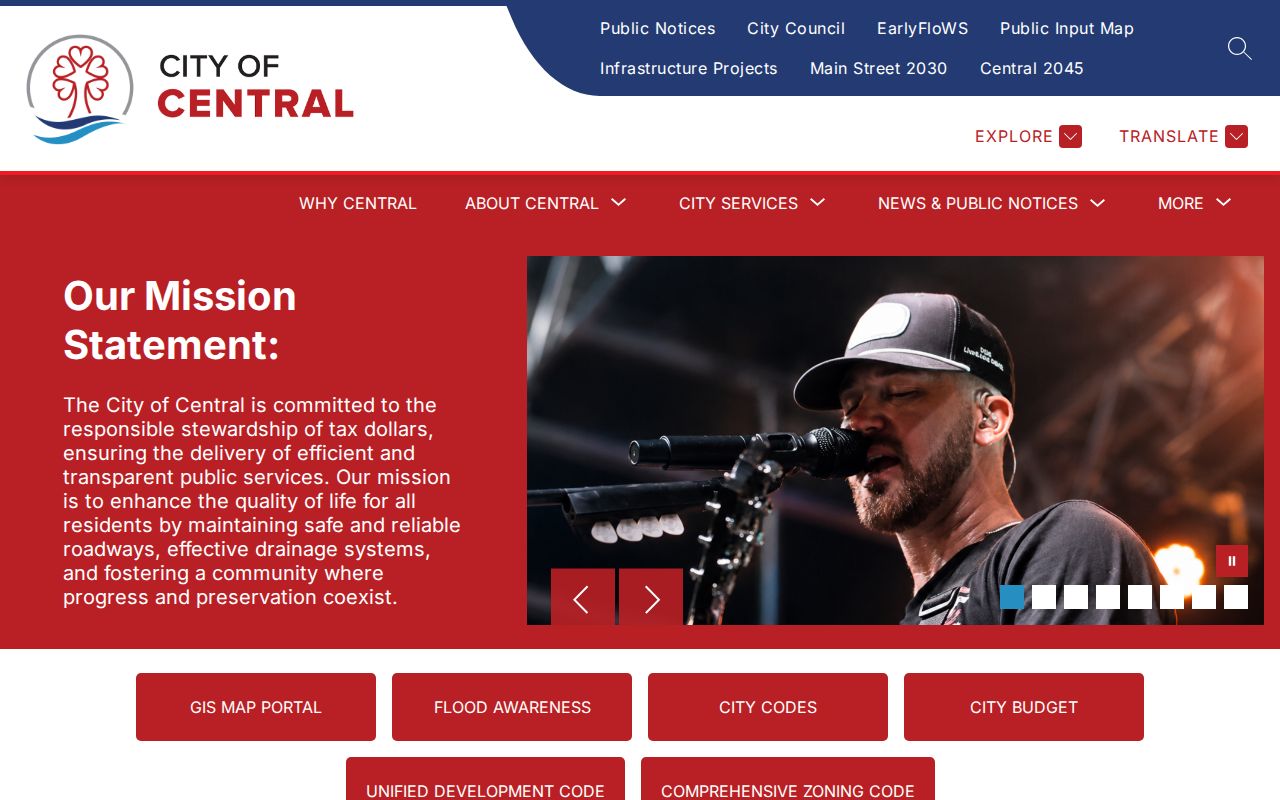
Municipal records begin with the city, while deeds, assessments, most court files, and older archives remain parish or state records.
Louisiana Records Rights
Louisiana Public Records Law, La. R.S. 44:1 et seq., provides a right to inspect, copy, or reproduce nonexempt public records. R.S. 44:32 states that inspection is free, though reasonable posted copy fees may apply. A custodian who determines that material is not public must give a written determination within five days, excluding weekends and legal holidays. R.S. 44:35 supplies an enforcement route after denial or lack of a timely determination.
The official statute index anchors those rules:
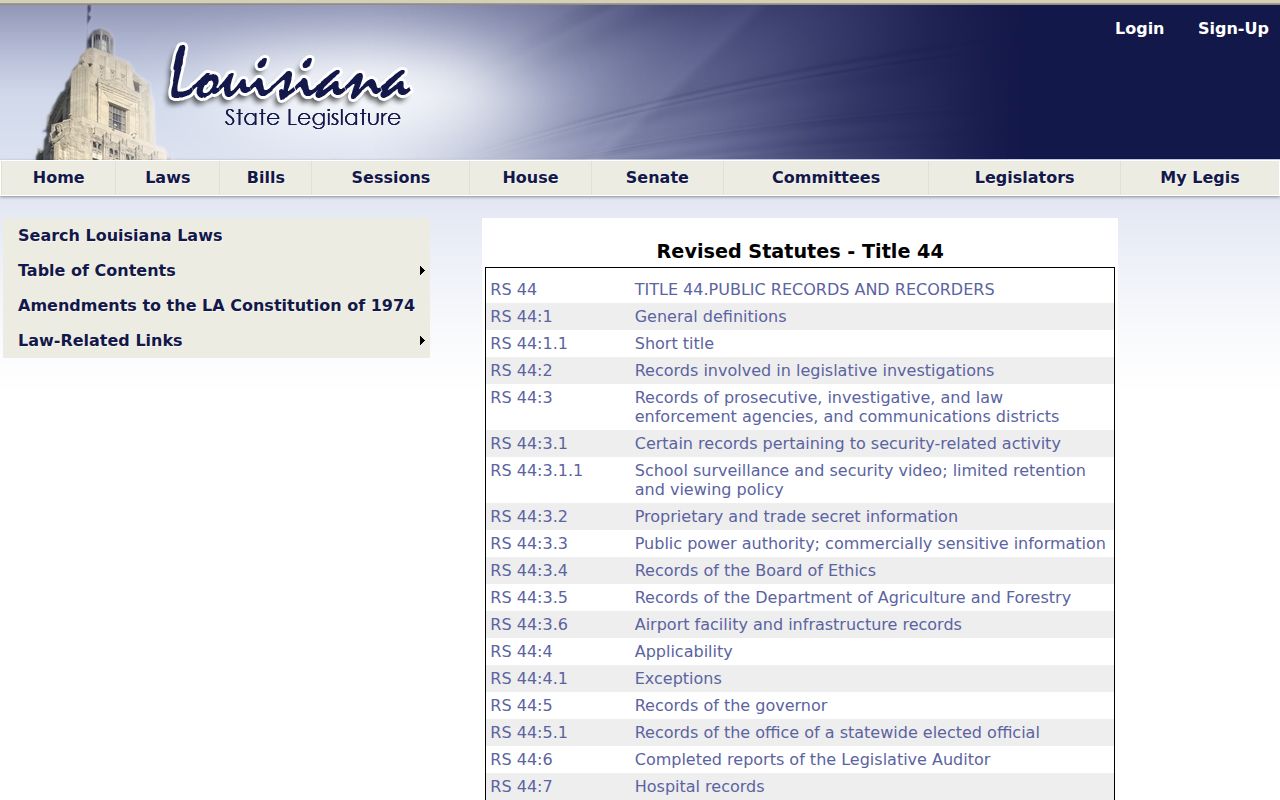
Exemptions still govern vital, adoption, juvenile, sealed, victim, and protected-voter information. A precise request is more useful than asking for every record about a person.
Reading Central Clerk Records
The East Baton Rouge Parish Clerk publishes routes for mortgage, conveyance, civil, criminal, traffic, marriage, copy, and archival records. The principal office is at 222 St. Louis Street in Baton Rouge, and Archives is at 444 St. Louis Street. Property research can be directed to 225-389-3979; Archives uses 225-389-3988. Public hours shown by the Clerk are weekdays from 8:00 a.m. to 4:30 p.m.
The Clerk's official landing page makes the parish-wide role clear:

Central residents may appear under Baton Rouge mailing labels or East Baton Rouge Parish indexes. Search the custodian and parcel context, not only the city text in an address.
Central Records Before 2005
Central became a municipality in 2005. A supposed Central municipal file from an earlier year is therefore a warning sign. Pre-incorporation residents are traced through East Baton Rouge Parish deeds, tax rolls, court and probate records, census schedules, church and school sources, newspapers, cemeteries, and Baton Rouge-area directories. This geography explains why older addresses may use Baton Rouge or another postal label even when the land is now understood as Central.
- Parcel
- A legally mapped piece of land used by the assessor and GIS.
- Index
- A finding aid that points to a recorded document; it is not always the document image.
- Criss-cross directory
- A directory arranged by street and house number rather than only by surname.
- Situs address
- The physical location of property, which may differ from an owner's mailing address.
Verifying Central Court Names
A court index can distinguish two people with similar names, but it should be read with care. The 19th Judicial District Court serves East Baton Rouge Parish, and Clerk Connect exposes civil search fields for suit type, date range, suit number, party name, and attorney. Results can point to a docket, which is the court's numbered case record. A filing identifies a party in a legal matter; it does not by itself establish a current home address or prove the allegations in a pleading.
Older case locations depend on number and date. The Clerk says most new civil files became electronic after October 1, 2020, with exceptions such as probate and original notes. Some earlier files are at the courthouse, former City Hall, or Archives. Search the index first, then ask the Clerk where the numbered record is held. For a Central City Police traffic matter, the Clerk's traffic route may apply even though municipal ordinance matters can go through Central Mayor's Court.
Central Vital Record Boundaries
Birth and death records are not open resident rolls. Louisiana is a closed-record state. Birth certificates stay confidential for 100 years and death records for 50 years under La. R.S. 40:41 and related rules. Current orders require an eligible relationship, signed application, identification, and the applicable fee. The East Baton Rouge Clerk offers a local birth and death counter, while the Louisiana Department of Health remains the statewide custodian.
Older eligible records transfer to the State Archives, where index coverage and archival copies follow separate rules. Marriage records outside Orleans Parish come from the parish Clerk, and divorce decrees also come from the Clerk rather than the health department. For family connections affected by adoption, Louisiana provides an official voluntary reunion registry based on eligibility and mutual consent. Sealed adoption records are not opened by a general resident search.
Central Search Cross-Checks
A good match uses facts that arise independently. Compare an assessor owner with a deed party, or a directory address with a census household and obituary. Check middle names, date ranges, parish, subdivision, and document type. A business filing can identify an officer or registered agent, while a state license portal can confirm a credential and status. Neither should be stretched into proof of private residence.
| Starting fact | First source | Useful check |
|---|---|---|
| Street address | SmartCAMA and EBRGIS | Clerk conveyance index |
| Full name | Clerk or voter search | Property, license, or business record |
| Old household | City directory | Census, obituary, deed, or probate |
| Company tie | Louisiana commercial search | Municipal license or recorded act |
Record a source date and exact spelling as work proceeds. Public data changes, and a stale address or closed case can otherwise be mistaken for a current fact.
Historical Central Resident Directories
The Central Branch Library and EBRPL digital resources provide the local entry point, while the Baton Rouge Room holds city directories, yearbooks, maps, photographs, newspapers, and obituary tools. The State Library's Louisiana Collection adds city directories, phone books, census material, maps, and parish history. National Archives holdings identify Baton Rouge directories for 1929, 1931, and 1934. These are Baton Rouge-area sources, not proof that every entry lies inside today's Central boundary.
Work from a known year toward nearby years. Copy the entry exactly, including spouse, occupation, employer, and street number, then check whether the address or surname changes in the next available volume. Reverse directories can start from a house number when the resident's name is unknown. Census schedules add household relationships at ten-year intervals, while obituary spreadsheets can connect relatives and burial details. A directory absence may reflect a missing volume, an unlisted household, a rural route, or a postal label filed under Baton Rouge. It does not prove that a family left the area.
The Louisiana State Archives research library supplies another route for parish, census, church, land, military, and vital-index research:
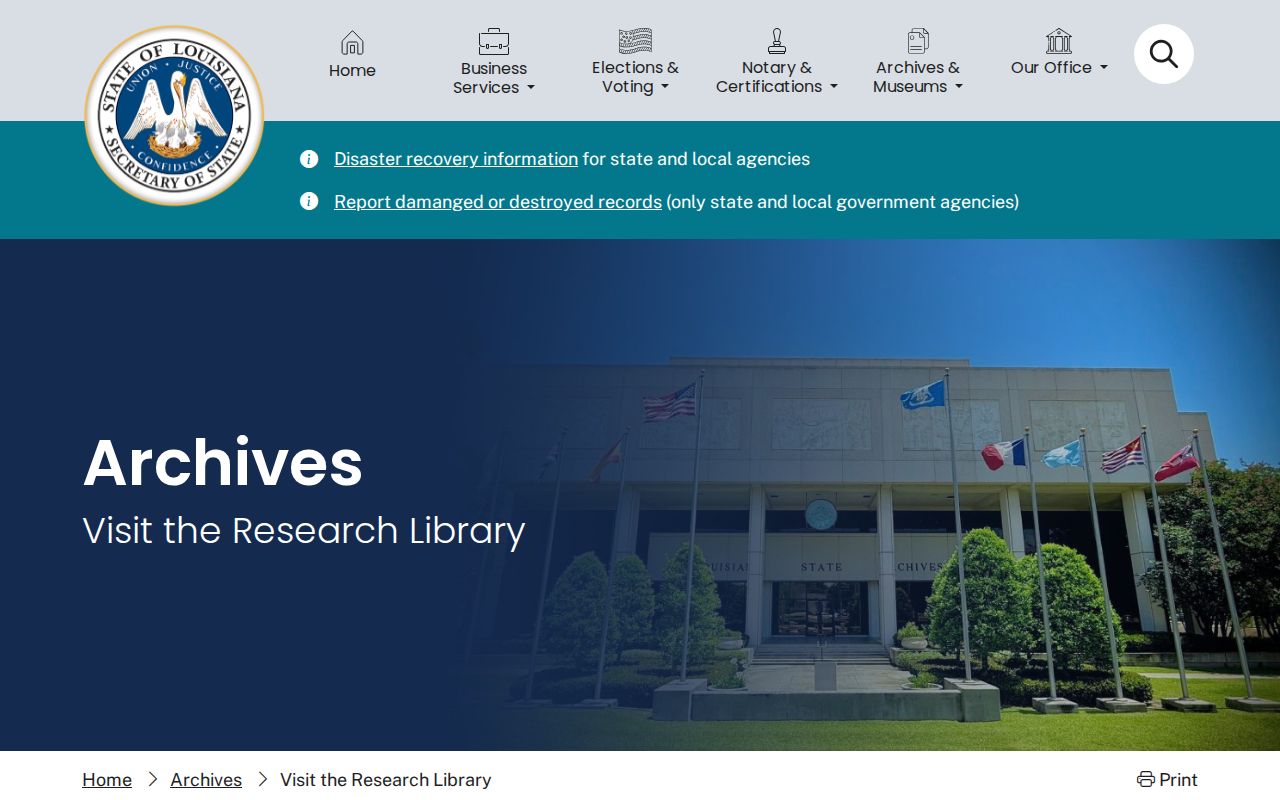
Its parish records and microfilm can bridge gaps that no web portal fills. The Central city directory page explains the shelf and year-by-year method.