
Central Previous Residents by Era
The first source depends on the date. Central did not become a city until 2005, so older people and parcels usually appear in East Baton Rouge Parish or Baton Rouge-area records. Start with a current assessment and deed when the street still exists. For an older address, a directory, tax roll, map, or census may provide the bridge.
| Source | Years It Covers | Where Held | What It Shows |
|---|---|---|---|
| EBR Clerk parish archives | 1782 onward | Clerk Archives, 444 St. Louis Street | Notarial, civil, probate, criminal, and parish indexes |
| EBR Clerk tax rolls | 1872 onward | Clerk Archives; confirm year | Tax and ownership trail |
| Baton Rouge Sanborn map | May 1885 confirmed | Library of Congress | Buildings and streets, not resident names |
| Baton Rouge city directories | 1905–1960 runs, with gaps | Library inventories; verify item | Dated names, addresses, occupations, and businesses |
| Federal census | Through 1950 publicly available | NARA and library databases | Historical household at a census date |
| EBR Clerk map index | 1963–1985 | Clerk index and Archives | Subdivision, map, lot, and tract continuity |
| Modern assessment | Current and prior year shown | SmartCAMA and Assessor | Owner, mailing and situs leads, values, parcel number |
No official earliest year was found for the online deed or assessment systems. Clerk Archives, staffed library help, and specific copy requests are essential fallbacks. Do not fill a coverage gap by assuming the present street number existed in the same form.
Central’s 2005 History Divide
The city’s incorporation creates a clean research split. A municipal permit or Central City Hall file cannot predate the legal city. The land and families can be far older. Before 2005, search East Baton Rouge Parish, Baton Rouge-area directories, school and church material, deeds, census schedules, newspapers, tax rolls, and rural community names.
Place variants matter. A record tied to modern Central may say Baton Rouge, Greenwell Springs, Pride, Comite, or another postal label. Roads such as Sullivan and Hooper are more stable clues than the city field alone. Keep the exact place label from each source instead of rewriting it as “Central.”
This is a local records story, not a contradiction. Central is young as a government and old as a settled landscape. The parish archive reaches back to 1782, while tax rolls begin in 1872.
Walk Central’s Deed Chain Backward
Begin at the EBR Assessor SmartCAMA search. Record the assessment number, owner, mailing address, physical or situs address, tax year, and any homestead or exemption indicator. Situs means the physical location. Mailing data comes from a recorded transaction and may point elsewhere, so keep the two addresses separate.
- Confirm the parcel, subdivision, lot, municipal boundary, and road name in EBRGIS. Save the map date and parcel ID.
- Search the current owner as grantee or vendee in the EBR Clerk mortgage and conveyance route. A grantee receives an interest; a grantor gives it.
- Open or request the deed. Copy the record date, original or bundle number, parties, legal description, map reference, and prior instrument.
- Search the seller as a grantee to find that seller’s earlier purchase. Repeat with initials, married names, estate names, and spelling variants.
- When online access ends, give Clerk Archives the parties, roles, approximate dates, subdivision or legal description, and requested copy type.
A chain of title is the linked series of transfers affecting the same land. The legal description identifies the tract through lot, block, subdivision, map, or measured boundaries. It often survives a changed house number better than a mailing label.
- Grantor and grantee
- The person or entity giving an interest and the one receiving it.
- Chain of title
- The sequence of recorded transfers for the same property.
- Legal description
- The formal land description used to match old and current parcels.
- Index and instrument
- The index points to a filing; the instrument is the recorded document itself.
Central Previous Residents at Archives
Clerk Connect provides current online routes for property and other parish records, but it uses passes and print charges. The Clerk states that in-person inspection of public records is free. Copies and certifications have separate charges, and the published terms differ by medium. Confirm current amounts before ordering.
The East Baton Rouge Clerk Archives at 444 St. Louis Street is the key pre-digital stop. It holds original parish records, notarial indexes, tax rolls, and older probate and civil material. Property research can begin by phone at 225-389-3979; Archives uses 225-389-3988. A narrow request gets a better result than “all deeds for this address.” Include the party, date span, document type, parcel or lot, and known record number.
Research tip. If an estate conveyed the property, follow the succession file and judgment of possession before continuing to the decedent’s earlier deed.
Tax sales, sheriff sales, adjudications, redemptions, servitudes, restrictions, and subdivision maps may interrupt a simple sale-to-sale trail. Preserve each cited prior instrument. Never treat an index hit as proof of all terms in the deed.
Pair Central Directories and Census
Owners are only part of a house history. City directories and census schedules can name people who lived at an address without owning it. Start with a dated deed or tax roll, then choose the closest directory year. Search the name section and, where available, the criss-cross section arranged by street and house number. The collections and publisher runs are described on the Central city directory page.
The Library of Congress city directory guide explains common alphabetical, address, and telephone arrangements.
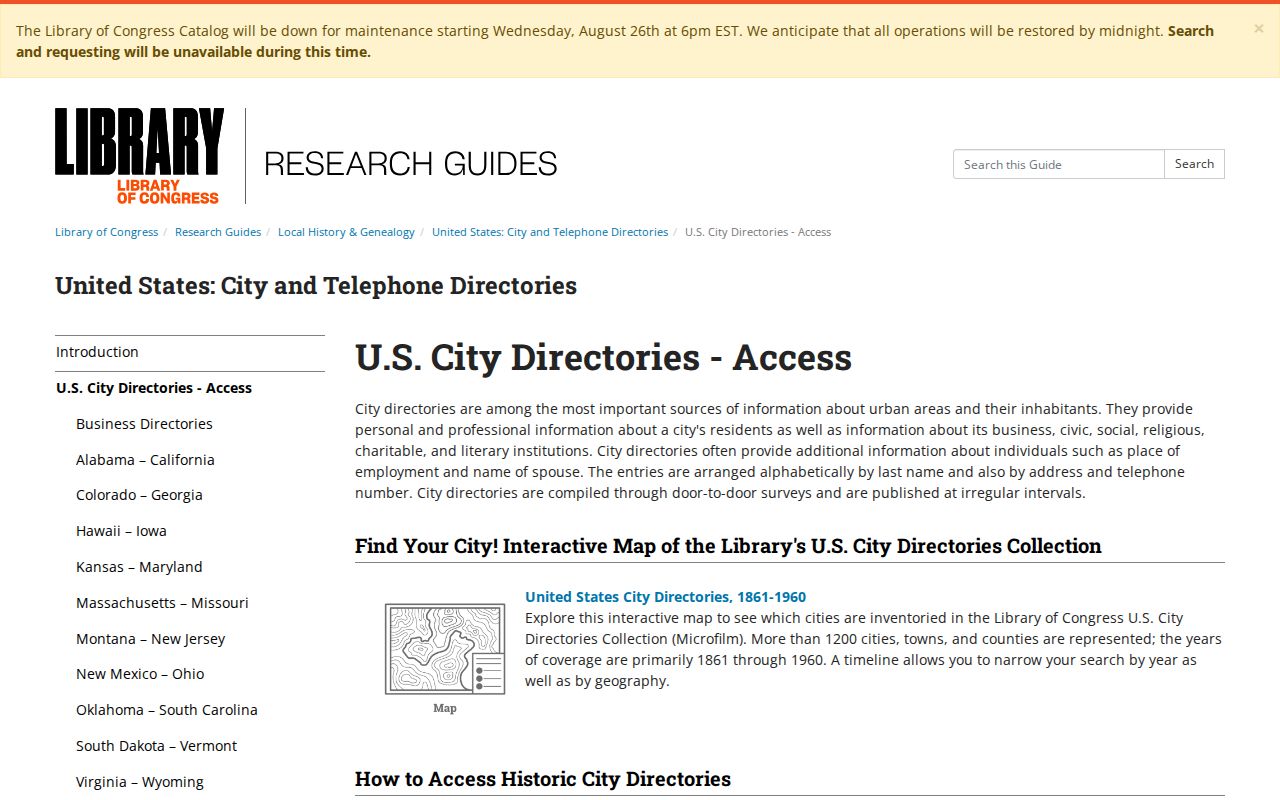
The guide helps interpret the source type, while the local volume controls the actual abbreviations and coverage.
- Copy the address exactly from the directory, including road spelling and any rural route notation.
- Record each printed name, occupation, spouse notation, and telephone field without adding facts.
- Check the closest public census schedule for a household at that date and place.
- Use the next directory year to test a move, death, or change in household form.
- Return to the deed, tax roll, obituary, or probate file for an independent link.
NARA’s public census release currently reaches 1950. The National Archives also lists Baton Rouge directory holdings for 1929, 1931, and 1934.
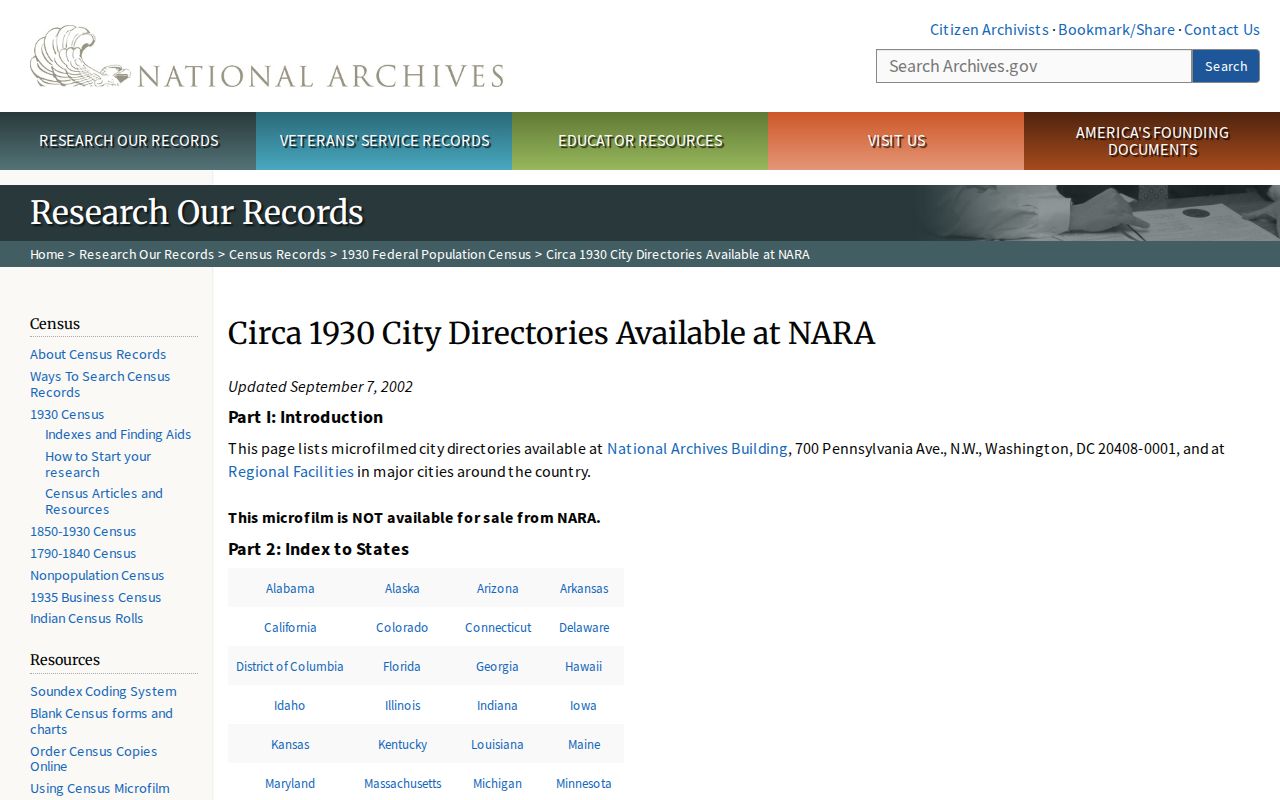
Those editions are federal holding leads, not proof that present-day Central had its own heading or that every household was included.
Map Old Central Addresses Carefully
The confirmed 1885 Baton Rouge Sanborn item contains six sheets and shows building and street context. It does not name residents, and the research did not establish that every present Central parcel appears. Use it to test old street form or a building reference only after checking the sheet coverage.
The 1963–1985 Clerk map index is more direct for subdivisions. Its groups cover 1963–1974, 1975–1979, and 1980–1985. A subdivision name, lot, block, neighboring parcel, or recorded map can link a deed to modern GIS when the street number fails. Record the map citation and compare geometry, not just labels.
Current EBRGIS can confirm parcel shape, subdivision, zoning or land-use context, adjacent lots, and municipal boundaries. Map layers can change, so note the date. A map identifies land relationships. It does not identify who occupied the building.
Obituaries Close Central Resident Trails
EBRPL’s obituary index route groups material for the 1940s, 1950s, 1960s, 1970s, and 1979–1991. Search a surname and likely year, then request the newspaper image. Capture the publication date, relatives, funeral home, church, cemetery, former address, and occupation exactly as printed.
An obituary can explain why a name vanishes from a directory, but relatives named in the notice did not necessarily live at the same address. Confirm the relationship with probate, marriage, deed, cemetery, or vital records. Probate and a judgment of possession can be especially useful when property passed through an estate.
No city-run Central cemetery or public interment database was verified. Ask the cemetery office or church for a dated burial lead, and use Louisiana vital records only through the lawful eligibility route. Historical context is not a reason to seek protected records.
Central Library House Research
The Central Branch reference desk can route a request for directories, maps, yearbooks, newspapers, photographs, obituaries, and Baton Rouge Room files. Give the street, approximate year, subdivision or community, former owner, and desired source. Ask whether the item is digital, onsite, microfilm, or available by interlibrary service.
The branch history supplies its own geographic trail: W.R. Edwards Store across from Central School, a 1944 closure, a 1945 reopening, a 1972 move to 13505 Hooper Road, and library-system purchase in 1982. A search tied to school, store, or road can succeed when a modern “Central” keyword does not.
State Library and State Archives are further fallbacks for directories, maps, parish microfilm, newspapers, WPA files, and old indexes. The Clerk proves or indexes the legal act; libraries and archives explain the setting. Keeping those functions distinct prevents a vivid local story from being mistaken for title evidence.
Use Central Previous Residents Lawfully
A solid address history labels every relationship: owner, taxpayer, directory householder, census household member, probate party, applicant, or obituary relative. None of those terms automatically means current occupant. Stop when the house-history or family-history question is answered, and avoid gathering extra personal details about living people.
Lawful use. Research previous residents for family and house history, never to track, threaten, expose, or harass a living person.
Protected voter addresses, confidential vital records, sealed cases, adoption files, juvenile records, and Louisiana Address Confidentiality Program data follow their own rules. A missing public result may reflect privacy protection, an unlisted household, a changed name, or a coverage gap. It is not proof that no person or record exists.
The best final product is a dated evidence chain. Cite the parcel or legal description, record type, custodian, date, and exact name form. Mark uncertainty plainly. That keeps Central previous residents attached to the right place without turning old sources into claims about the present.