
Central Directory Collections by Era
Central became a municipality in 2005, yet the communities now inside its limits have a much longer paper trail. Earlier research belongs under East Baton Rouge Parish, Baton Rouge-area publications, Central School, church names, and roads such as Hooper and Sullivan. No verified shelf contains a continuous run labeled only “Central.” Useful city directory collections overlap the present geography and must be checked volume by volume.
| Collection | Years | Where Held | Access |
|---|---|---|---|
| Baton Rouge city directories | 1905–06; 1908–09; 1911; 1913–16; 1918; 1922–27; 1929; 1931; 1934; 1936–60 | Public-library inventory; confirm with EBRPL or State Library | Staff-assisted shelf or microfilm request |
| NARA directory holdings | 1929, 1931, 1934 | National Archives locator | Federal research route |
| Polk’s Greater Baton Rouge | 1950, 1951, 1952–53, 1954, 1956 | Louisiana survey bibliography | Confirm item with a library |
| Criss-cross material | Exact years not verified | EBRPL or State Library | Ask for address-order volumes |
| Central City Directory | 2015 | Central City News PDF | Free online; civic and business context |
Publication was not annual in every period, and the inventory flags an apparent repeated 1954 line in a 1958 bibliography entry. Confirm the title page, year, and publisher before citing a volume. A missing year does not prove a family left Central. The publisher may have skipped that year, omitted a rural route, or listed the address under another postal place.
Central City Directory Library Routes
The Central Branch Library is the closest place to ask where a directory, yearbook, map, or newspaper file can be found. Its listed reference number is 225-262-2650. The branch holds about 100,000 items and provides public computers and staff help, but its page does not promise a complete local directory run. Give the librarian a surname, road, approximate year, school or church, and source type.
Special collections are routed through the EBRPL Baton Rouge Room at Main Library, 7711 Goodwood Boulevard. Its described holdings include city directories, yearbooks, photographs, maps, letters, programs, clippings, and vertical files. The EBRPL digital research list also points to newspapers, genealogy databases, and the special-collections catalog. Licensed access can depend on a library card or an in-library visit.
The branch itself carries a place-history clue. It began in the W.R. Edwards Store across from Central School, closed in 1944, reopened in 1945, moved to Hooper Road in 1972, and entered library ownership in 1982. Those names help locate school and community news when a city directory search stalls.
Decode a Central Directory Entry
A printed listing is a dated snapshot, not proof of where someone lives now. The Library of Congress explains that city directories often arrange people alphabetically and may also contain address or telephone sections. Record the text exactly, including initials and abbreviations. A spouse notation, occupation, or business can separate people who share a surname.
| Name | The printed person or business, often using initials. |
|---|---|
| Household notation | A spouse or relationship only when the publisher printed it. |
| Occupation | A trade or employer that can lead to newspapers. |
| Address | The number and road spelling used in that edition. |
| Telephone or category | A phone listing or business class in some volumes. |
No live Baton Rouge directory page was captured in the research, so unexplained letter codes must not be guessed. Copy the volume’s own key first.
- Criss-cross directory
- A volume or section arranged by street and house number.
- Householder index
- An address list of the person treated as the main household entry.
- Abbreviation key
- The publisher’s legend for roles, street terms, and shortened words.
Central Directories and Digital Archives
Online collections support the shelf search, but none is a complete digitized Central city directory run. EBRPL’s Baton Rouge Room Digital Archive carries local images and papers. Its obituary indexes are grouped by the 1940s, 1950s, 1960s, 1970s, and 1979–1991. An index hit is a lead to a newspaper item, not a death certificate.
The State Library Louisiana Collection describes historic directories and phone books alongside newspapers, census material, parish microfilm, WPA files, maps, photographs, and vertical files. Louisiana State Archives adds parish and vital-index research. Ask whether an item is online, onsite, on microfilm, or available by mail.
NARA lists Baton Rouge directories near the 1930 census. Census schedules through 1950 are public under the 72-year release rule. Pairing them with a nearby directory edition can resolve a household between census years.
Modern Central Municipal Directory
The City of Central staff directory has name and department filters for the mayor, administration, planning, GIS, permits, code enforcement, public works, engineering, citizen services, and public information. It identifies officials and staff, not residents. The captured page shows the public contact route.
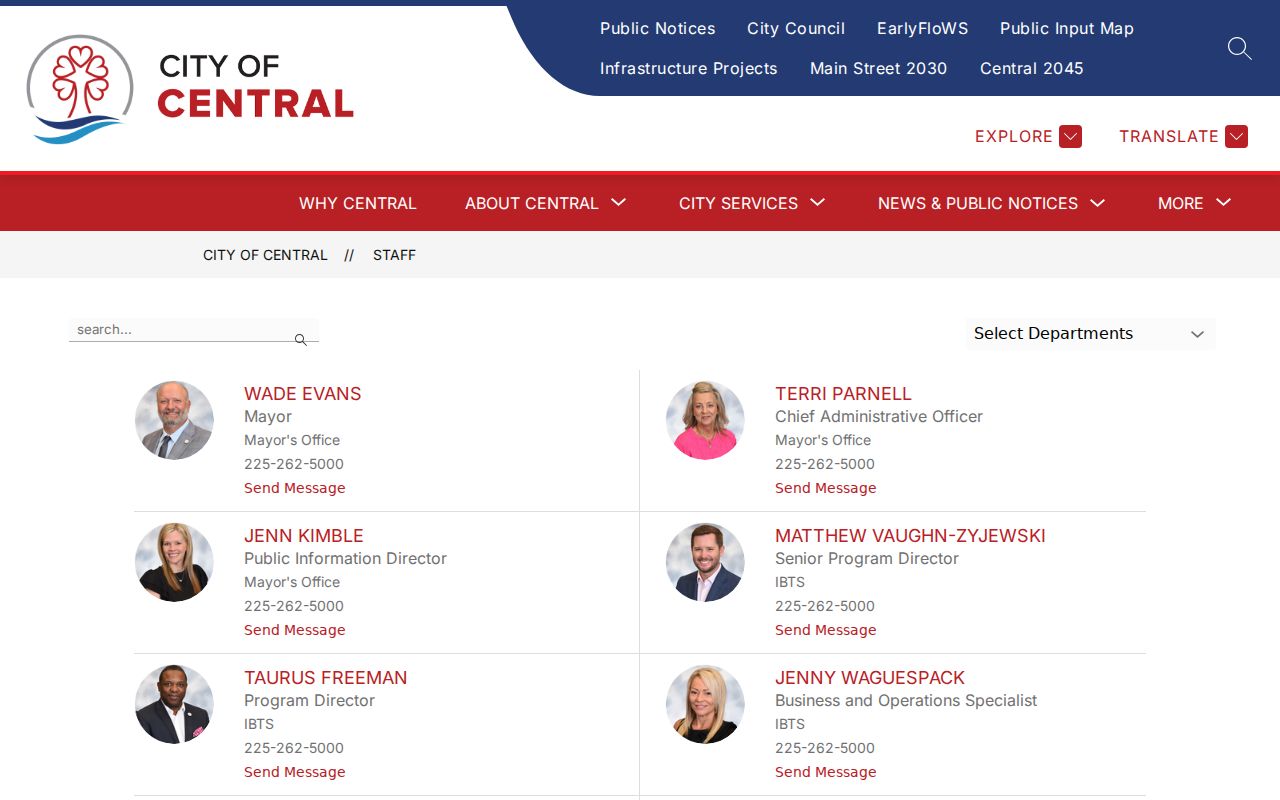
Use the department to identify the right custodian. Never treat an employee listing as proof of residence. City Hall records also cannot replace older parish records that predate incorporation.
Central Directory Clues in City Files
Modern municipal files can attach a public name to a role, application, hearing, or business address. Central routes permits and inspections online, but the static page did not expose a verified public search field list. The Central inspections page is the proper start.
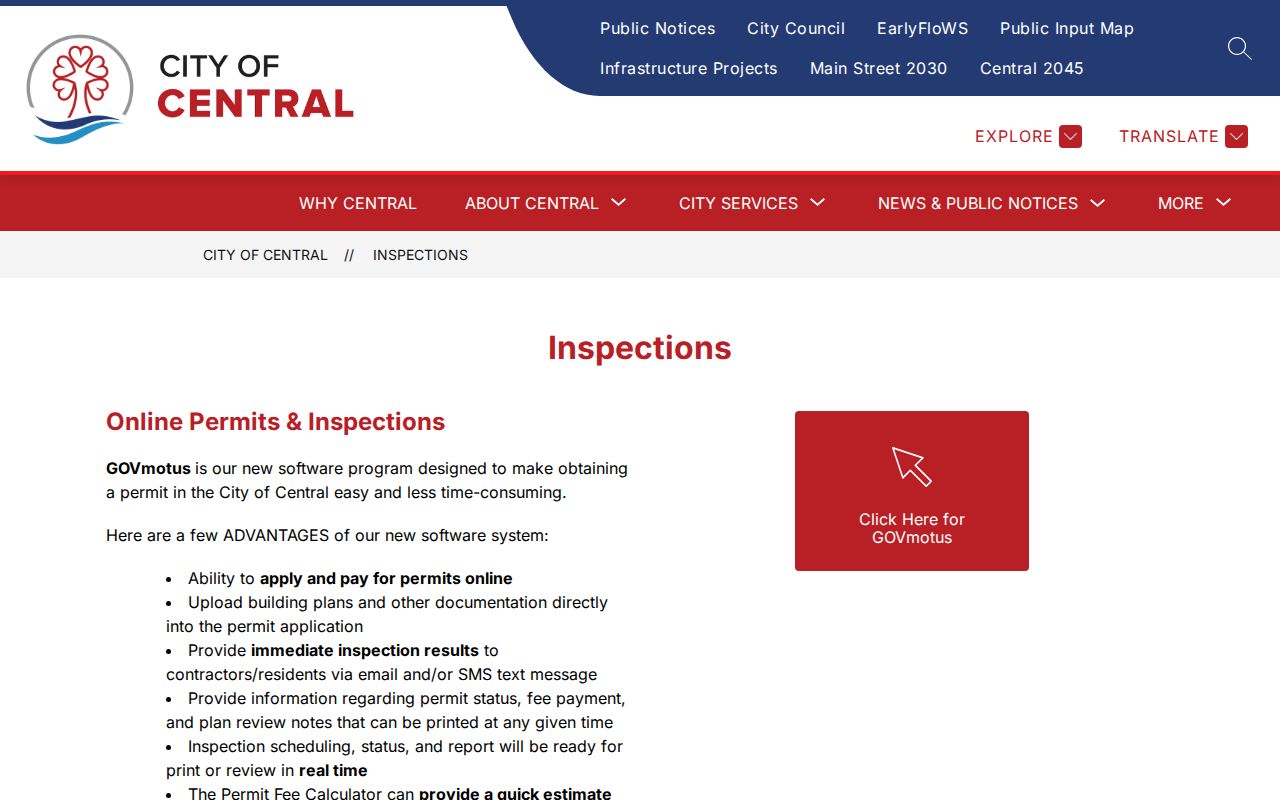
It supports applications, uploads, plan-review status, inspection scheduling, reports, and a fee calculator. Public name or address searching must be checked live. Planning files may name an applicant, owner, developer, or speaker, but those roles do not prove residence.
Request Missing Central Directory Records
When minutes, permit files, or notices are not posted, use the Central public-record request route. The city identifies IBTS as custodian or authorized responder under Louisiana law. Name the record type, address, date range, department, and desired format. Ask for a fee estimate and lawful redactions.
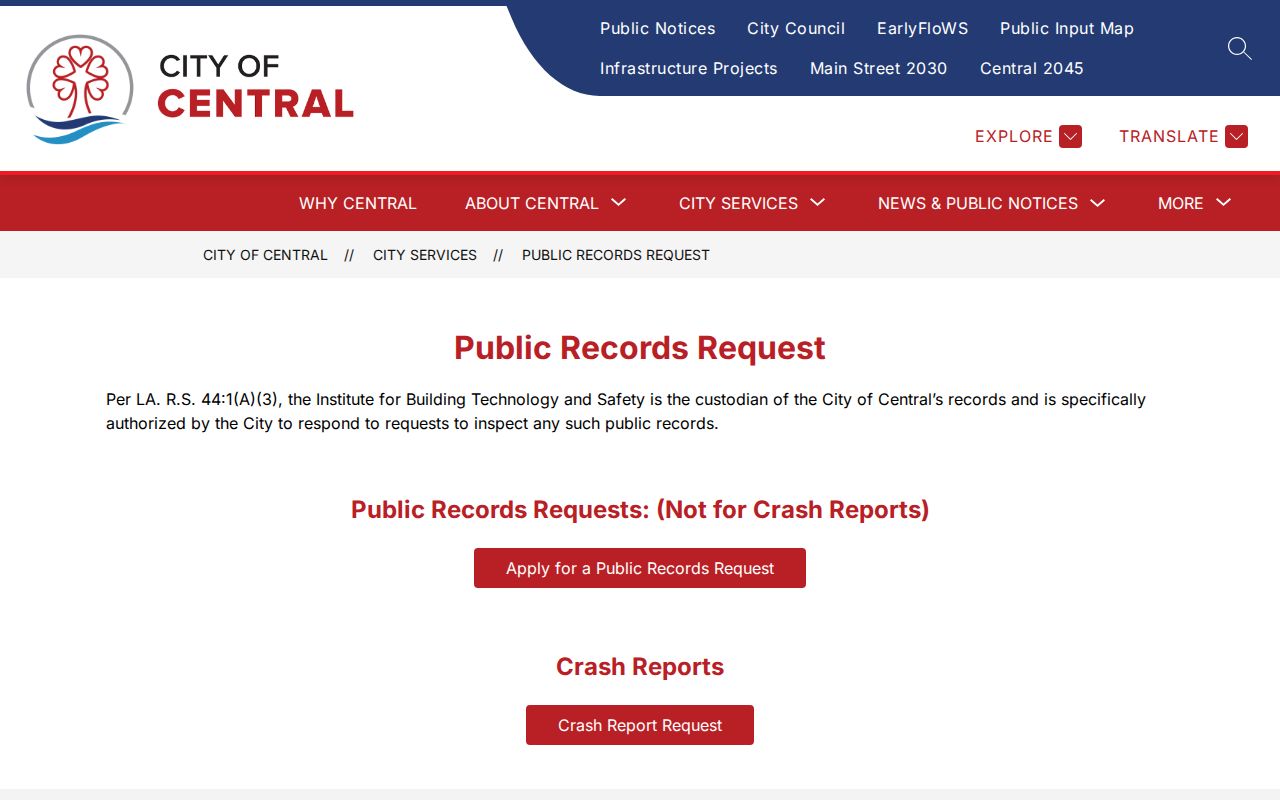
A focused request works better than asking for every record about a surname. It also keeps city files apart from deeds, assessments, court cases, and voter records held elsewhere.
The Central public notices page holds planning, drainage, meetings, and workshop material.
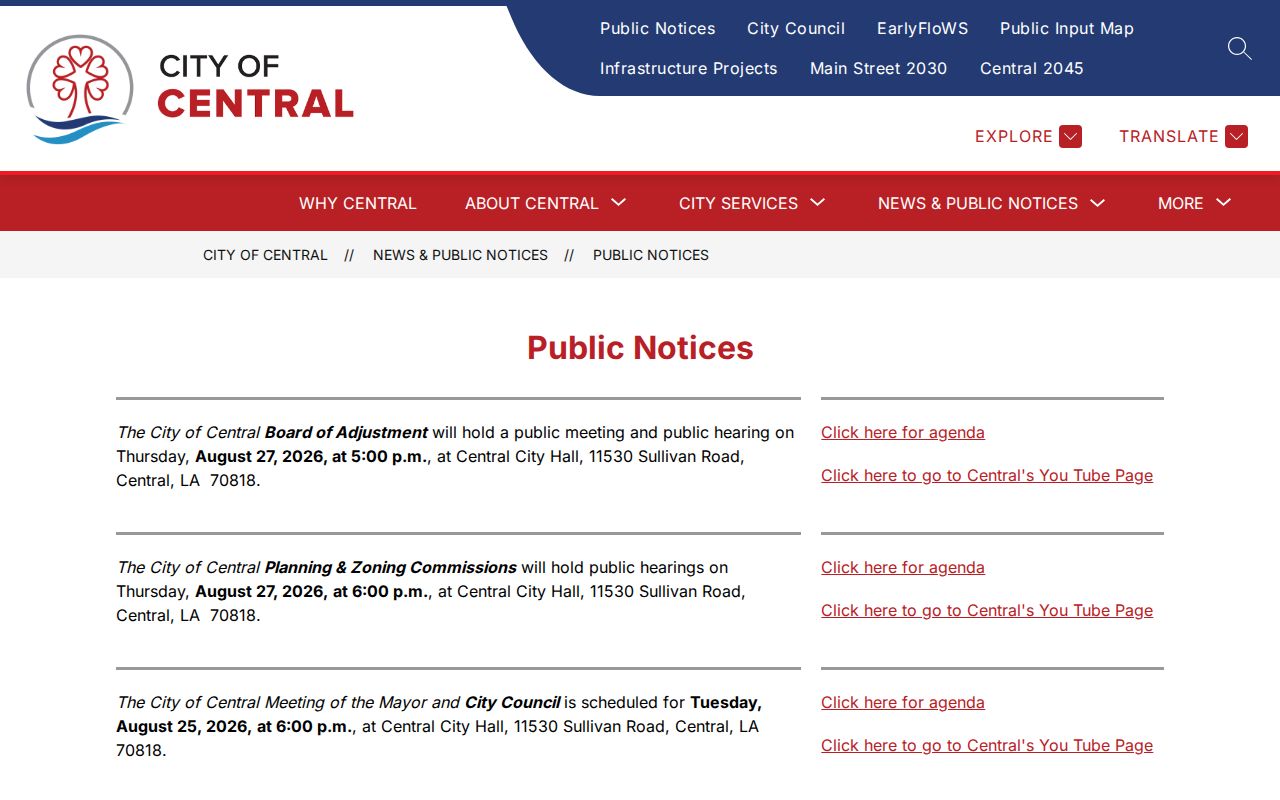
A notice offers dated civic context. It is not a household roll.
Special Central Directory Record Routes
Some current files have their own channel. Central crash reports may be requested by email, at the listed counter, or through a form. The crash-report page lists $7.50 for cash or check and $10 for card requests, with card authorization required.
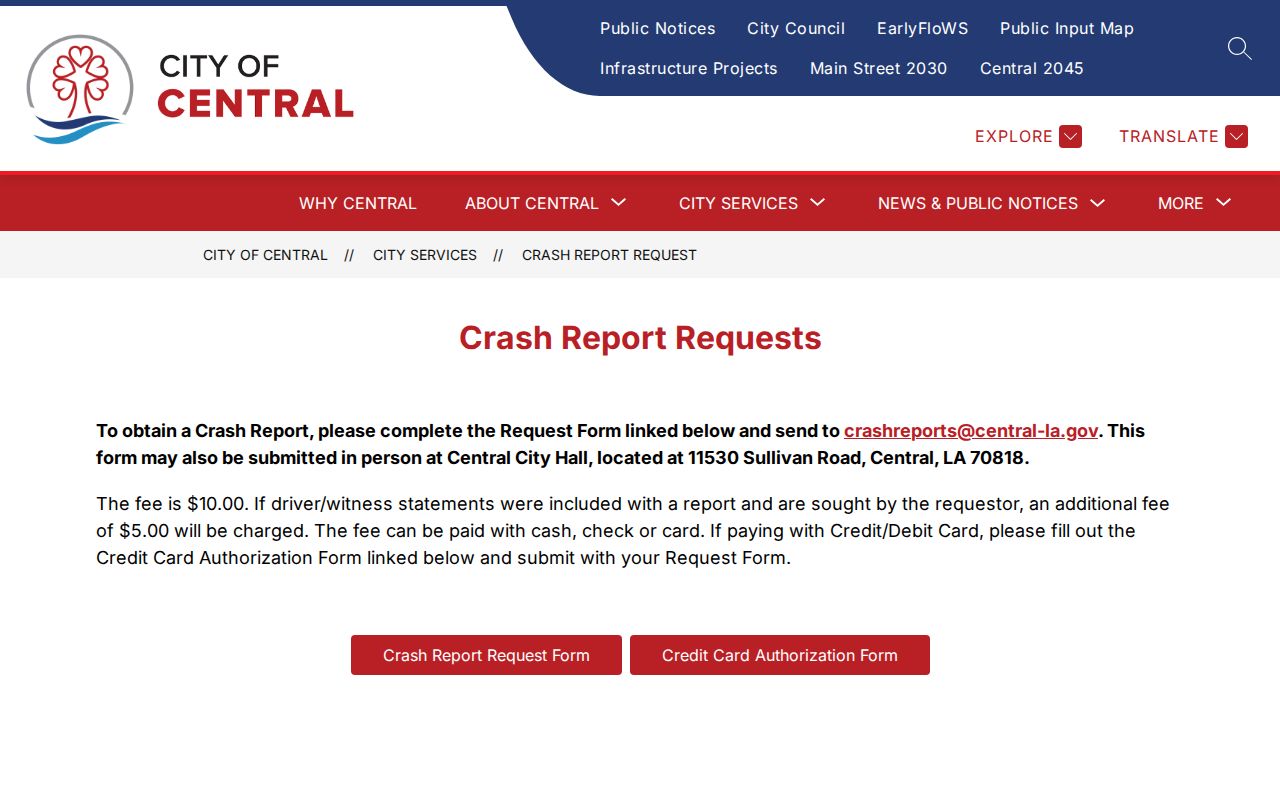
An incident report is a specific record route, not a broad people search.
Central also publishes occupational-license information with application and checklist material. Research found no searchable roster.
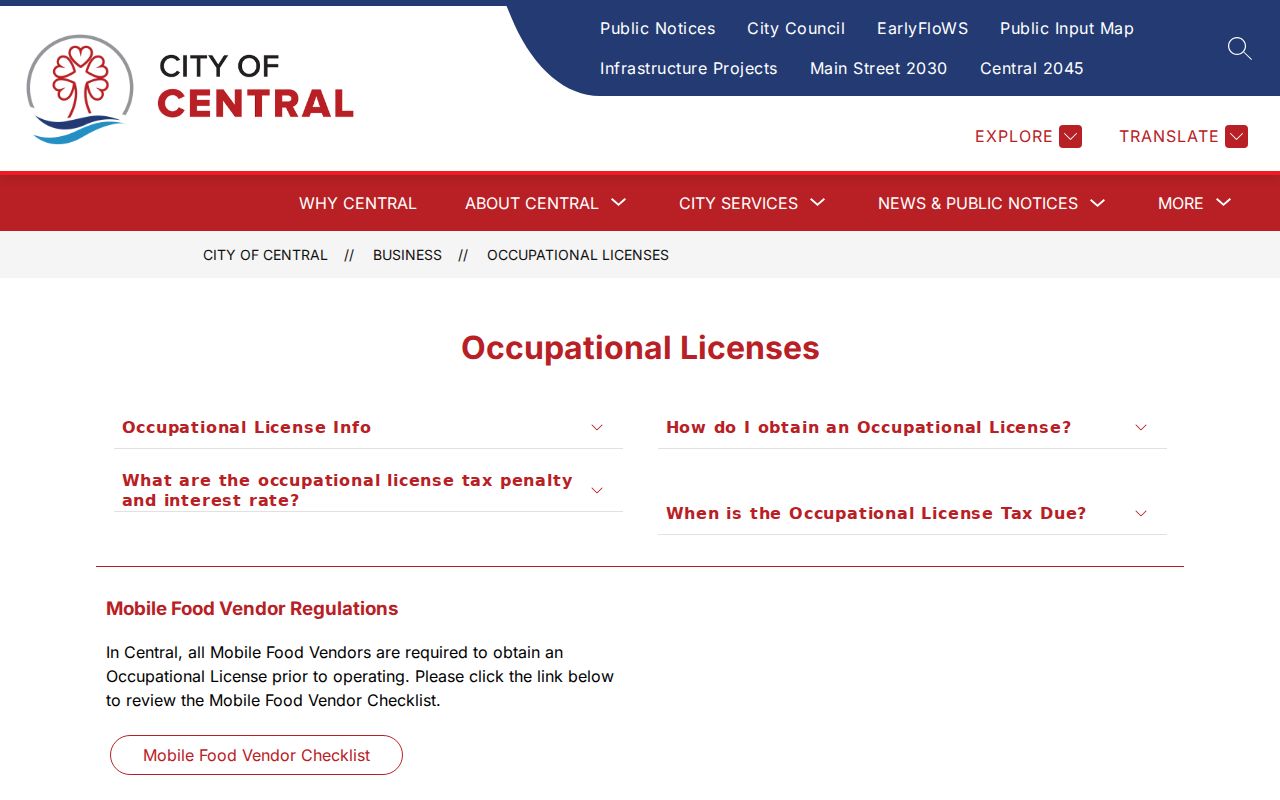
Ask for a named business and date range rather than assuming the application page is a register.
Trace Family Through Central Directories
Begin with a dated surname, old address, school, church, obituary, or deed. Search Central, Baton Rouge, Greenwell Springs, Pride, Comite, Hooper Road, and Sullivan Road as place variants. A family may stay put while its city or postal label changes.
- Choose the closest directory year and search each surname spelling and initial.
- Copy the full entry, then check the address-order section if one exists.
- Move through available years, noting addresses, occupations, spouse notations, and gaps.
- Pair each city directory with the nearest public census, then use deeds or tax rolls to anchor the parcel.
- Close gaps with obituaries, probate files, yearbooks, newspapers, church records, or cemetery offices.
Absence may mean a move, an unlisted number, incomplete publisher coverage, or another community label. Verify with a second source. The Central previous residents trail follows one parcel backward through deeds, directories, census schedules, and obituary evidence.
A yearbook or school reference can narrow the search when a surname is common. Ask the Central Branch desk to check Central School material, local vertical files, and newspapers, then route the request to the Baton Rouge Room if needed. A church anniversary history may place a family in a community at a certain time, but no complete public index of Central church registers was found. Name the congregation, denomination, road, and likely decade when asking for help.
Obituary indexes add another dated checkpoint. EBRPL groups its available leads by the 1940s, 1950s, 1960s, 1970s, and 1979–1991. After finding a surname, request the newspaper image and record the publication, date, relatives, church, cemetery, former address, and funeral home. A relative named in the notice did not necessarily share the deceased person's home. Probate, marriage, deed, census, or cemetery evidence should confirm that link.
Property evidence can keep the geography stable while names change. East Baton Rouge Parish Clerk Archives offers parish records from 1782 and tax rolls from 1872. A tax roll may identify an owner, while a directory can place a listed householder at the street address. Neither source alone proves the full household. When a street number differs, compare the subdivision, lot, recorded map, neighboring tract, and road-name variants. The Clerk's 1963–1985 map index is especially useful between older paper descriptions and current parcel maps.
Write the result as a sequence of dated facts. Preserve each name exactly as printed, identify whether the source is alphabetical or address ordered, and cite its year. Mark gaps instead of guessing. This method lets a Central family trail cross parish records, Baton Rouge publications, and modern city geography while keeping every claim tied to the source that supports it.